
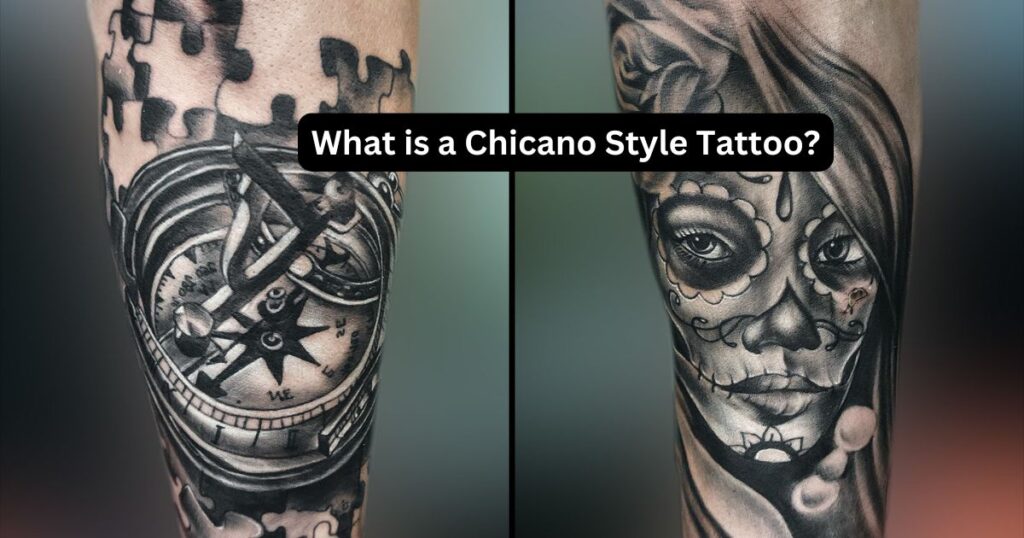
A Chicano style tattoo is fine-line black and grey work rooted in Mexican-American culture. It’s known for soft shading, elegant script, religious imagery and portraits of family, faith and the streets.
The style was born in Los Angeles barrios and California prisons. Artists had only homemade machines, single needles and whatever ink they could find. Those limits shaped the delicate, smoky look that defines Chicano tattoos today.
Where Chicano Tattoos Came From
Chicano tattooing traces back to the pachuco youth culture of the 1940s. Young Mexican Americans wore zoot suits and marked their hands with a small cross. That cross became one of the first Chicano tattoo symbols.
In prisons, inmates built machines from motors, guitar strings and pens. They drew with one needle and used ash or soot for ink. The result was thin lines and soft grey gradients.
In the 1970s, the style moved into professional shops in East Los Angeles. Artists like Freddy Negrete and Jack Rudy brought single-needle black and grey into the mainstream. It spread around the world from there.
What Defines a Chicano Style Tattoo
Black and grey only. Color is rare. Depth comes from diluted black ink.
Fine lines. Single-needle or small groupings create crisp, thin detail.
Smooth shading. Soft gradients look almost like a pencil drawing or a photograph.
Script lettering. Ornate script and Old English letters spell names, neighborhoods and phrases.
Personal imagery. Family, faith, pride and struggle drive most designs.
8 Classic Chicano Tattoo Designs and Their Meanings
1. Pachuco cross. A small cross with three lines, usually between the thumb and index finger. It points to pachuco roots and barrio pride.
2. Virgin of Guadalupe. Mexico’s patron saint. She stands for faith, protection and a mother’s love.
3. Payasas (clown girls). Often drawn as “smile now, cry later” masks. They show the gap between the face you show and the pain you carry.
4. La Catrina. The elegant skeleton lady from Day of the Dead. She means that death comes for everyone. See more on sugar skull and skull tattoo meaning.
5. Praying hands and rosaries. Faith, gratitude and prayers for loved ones.
6. Lowriders. Classic cars that celebrate Chicano car culture, pride and craft.
7. Aztec warriors and temples. Indigenous Mexican heritage and strength.
8. Portraits of family. Mothers, grandmothers and children rendered in soft black and grey.
Respecting the Culture Behind the Style
Chicano tattoos carry real history. Some imagery, like certain numbers or neighborhood names, can signal gang ties. Don’t copy symbols or letters you don’t understand.
If you don’t share the heritage, you can still wear the style with respect. Choose personal subjects and work with an artist who knows the tradition. Ask them about the meaning before you commit.
Placement for Chicano Tattoos
Chicano pieces often go big. Full back pieces, chest panels and sleeves give portraits and script room to breathe. Forearms suit script and single portraits. Hands and necks often carry lettering or small crosses.
Fine shading needs some size to stay clear. Very small Chicano tattoos lose their soft gradients as they age.
Healing Fine Black and Grey Work
Soft grey shading can fade if the tattoo heals badly. Keep it clean, moisturized and out of the sun. Cleveland Clinic advises against soaking a new tattoo in pools or baths until it heals. More tips are in our tattoo aftercare guide.
Chicano Lettering and Script
Lettering is as central to the Chicano style tattoo as any portrait. Old English script and ornate cursive often spell family names, neighborhoods or short phrases. Common words include “Mi Vida Loca,” “Familia” and “Madre.” Good Chicano lettering has crisp edges, flowing tails and even spacing.
The style grew partly from cholo graffiti and placas, the hand-painted names on walls in Los Angeles barrios. That street lettering moved onto skin, and it still shapes Chicano script today.
Chicano Tattoos and Women
Women have always been part of Chicano culture, both as subjects and as wearers. Classic designs include Aztec princesses, cholas with dark lips and hoop earrings, and Catrinas with flowers in their hair. Many women now wear Chicano tattoos themselves, often honoring mothers, daughters and faith.
How Chicano Style Spread Worldwide
In the 1970s and 1980s, tattoo magazines began printing Chicano black and grey work. Artists from Japan, Europe and South America studied it closely. Today, Chicano tattoo conventions and artists can be found far beyond California. The style keeps its roots, but artists everywhere add their own touch.
Cost and Sessions
Fine single-needle shading takes time. A forearm portrait may take one long session. A full back piece with portraits and script can take many sessions over several months. Most Chicano artists charge by the hour.
Chicano Tattoo Meaning in Everyday Life
For many families, a Chicano tattoo is a record of who they are. A mother’s portrait or a child’s name in Old English can mark a birth or a loss. A Virgin of Guadalupe across the back can mark a lifetime of faith. These pieces often get added to over decades. That’s why a Chicano style tattoo can feel like a family album worn on the skin.
Treat the imagery with care, and ask questions when you’re unsure. Most Chicano artists are proud to explain the history.
Ask to see healed examples of their lettering as well as their portraits.
Chicano Tattoo FAQs
Can a non-Mexican get a Chicano tattoo?
Yes, many artists tattoo clients of every background. Pick meaningful, personal subjects, and skip gang-linked symbols.
What is the difference between Chicano and black and grey realism?
Realism is a broad technique. Chicano style is a cultural tradition with its own imagery, lettering and history.
What does “smile now, cry later” mean?
It means hiding pain behind a smile. The two masks stand for joy now and the price paid later.
Finding a Chicano Tattoo Artist
Look for artists with strong single-needle work and smooth grey shading in healed photos. Lettering skill matters just as much as portraits. Many of the best Chicano artists still work out of Southern California. Plenty of others now work worldwide.
Related styles: American Traditional Tattoos · Blackwork Tattoo Style · Skull Tattoo Meaning · Tattoo Styles Explained