
Tattoo aftercare comes down to four habits. Keep it clean, lightly moisturized, out of the water and out of the sun. Do those for the first month, and most tattoos heal well.
A new tattoo is an open wound. The surface usually settles in two to four weeks. Cleveland Clinic notes that deeper skin layers can take several more months. Below is what to do at each stage, plus how to tell normal healing from a problem.
Tattoo Aftercare in the First 48 Hours
Do: follow your artist’s bandage advice. Artists use either a regular wrap or a clear adhesive film. Cleveland Clinic suggests leaving a standard bandage on for at least three hours, longer for big pieces. Film wraps often stay on for a few days. Your artist’s instructions come first.
Do: wash your hands before you touch it. Fresh tattoos pick up bacteria easily.
Do: wash gently. Use lukewarm water and a mild, fragrance-free soap. Clean it with your fingertips, never a cloth or sponge. Pat it dry with a clean paper towel.
Don’t: re-wrap it with cling film overnight unless your artist tells you to. Trapped moisture can slow healing.
Tattoo Aftercare in the First Week
Do: wash it twice a day. Morning and night is enough for most tattoos.
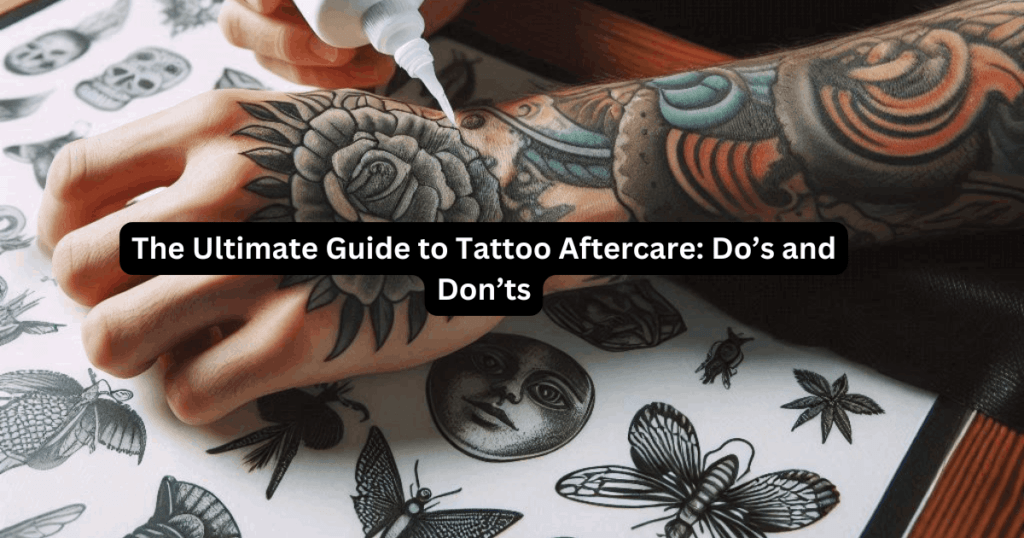
Do: moisturize lightly. Use a thin layer of unscented lotion two or three times a day. It should look barely shiny, not greasy. The American Academy of Dermatology warns that petroleum jelly can cause ink to fade. Our list of tattoo aftercare products covers good options.
Do: wear loose, clean clothes. Tight fabric rubs the skin and can stick to it.
Don’t: soak it. Skip baths, pools, hot tubs, lakes and the sea until it fully heals. Mayo Clinic gives the same advice. Short showers are fine.
Weeks Two to Four: Peeling and Itching
Around day four to seven, the tattoo starts to flake like a sunburn. It may look cloudy or dull for a while. That’s normal, and the color comes back once the new skin settles.
Don’t: pick, scratch or peel. Pulling off flakes can take ink with it and leave patchy spots. If it itches, pat it or apply a little lotion instead.
Don’t: shave or exfoliate the area until the skin is smooth again.
Do: keep up the routine. Wash daily and moisturize as needed until the shine and flakes are gone.
Normal Healing vs Signs of Infection
Some redness, swelling, tenderness, itching and light oozing are normal in the first few days. They should ease, not grow.
See a doctor if you notice any of these:
Spreading redness. Redness that keeps growing or forms red streaks.
Heat and worsening pain. Skin that feels hot, or pain that gets worse after the first days.
Pus or a bad smell. Thick drainage is not normal healing.
Fever or chills. These can mean the infection is spreading.
Itchy bumps that appear later, even years later, can be an allergic reaction to the ink. Mayo Clinic notes that red ink causes this more often than other colors.
Long-Term Care for a Healed Tattoo
Sun is the main reason tattoos fade. Once it heals, use a broad-spectrum, water-resistant sunscreen of SPF 30 or higher. The AAD recommends reapplying at least every two hours outdoors. Skip tanning beds altogether.
Keep the skin moisturized, and stay hydrated. Healthy skin keeps lines sharper. If anything about the tattoo changes years later, have a dermatologist look at it.
Tattoo Aftercare for Different Placements
Hands and fingers. You wash your hands often, so these tattoos fade faster. Pat them dry after each wash and moisturize lightly.
Feet and ankles. Shoes rub fresh tattoos. Wear open shoes or loose socks for the first week if you can.
Ribs and stomach. Waistbands and bras can rub. Choose soft, loose clothing.
Neck and face. Avoid makeup and hair products on the area until it heals.
Back. You can’t reach it easily. Ask someone to help you wash and moisturize.
Tattoo Aftercare for Different Styles
Fine-line tattoos need gentle care, since thin lines can heal patchy. Large blackwork and color pieces swell more and may scab heavier. Watercolor tattoos without outlines need extra sun protection. Ask your artist if their style needs any special care.
Foods, Drinks and Healing
Healing happens from the inside too. Drink plenty of water and eat well. Alcohol can thin the blood and slow healing in the first day or two. Smoking can slow skin repair as well. A healthy routine helps any new tattoo heal faster.
Tattoo Aftercare Mistakes People Make
Over-moisturizing. Thick layers suffocate the skin and can pull out ink.
Using the wrong products. Scented lotions, petroleum jelly and alcohol can irritate a new tattoo.
Sunbathing too soon. Fresh tattoos burn easily, and sun damage fades ink.
Scratching in your sleep. Wear loose clothing to bed so you don’t rub the tattoo.
Skipping aftercare once it looks fine. The surface heals before deeper skin. Keep going for the full month.
Good tattoo aftercare is simple, but it takes patience. A few weeks of care protects a tattoo you’ll wear for life.
If anything worries you during healing, call your artist or a doctor. Quick advice early can save a tattoo.
Tattoo Aftercare FAQs
When can I work out after a new tattoo?
Light activity is usually fine after a day or two. Avoid heavy sweating, friction and gym equipment on the tattoo for about a week.
Can I put sunscreen on a healing tattoo?
Not until it’s fully healed. Until then, cover it with loose clothing and stay in the shade.
Why does my new tattoo look faded?
A layer of healing skin sits over the ink in the first weeks. Most tattoos brighten again within a month.
When to Book a Touch-Up
Wait until the tattoo has fully healed, usually six to eight weeks, before judging it. Small gaps or light spots are common, especially on hands, feet and fingers. Most artists offer a free or cheap touch-up within a few months.
Related reading: How Long to Keep a Tattoo Wrapped · Tattoo Aftercare Products · First Tattoo Tips · Least Painful Places to Get a Tattoo · Second Skin Tattoo Aftercare