
Tribal tattoos and their meanings start with identity: traditional designs record who someone is. They can show family ties, rank, achievements, rites of passage or spiritual protection. Each culture has its own patterns and rules, so there’s no single “tribal” meaning.
The bold black armbands of the 1990s are a separate thing. Western artists borrowed shapes from Pacific and Bornean work and made them decorative. Both are covered below.
Polynesian Tribal Tattoos
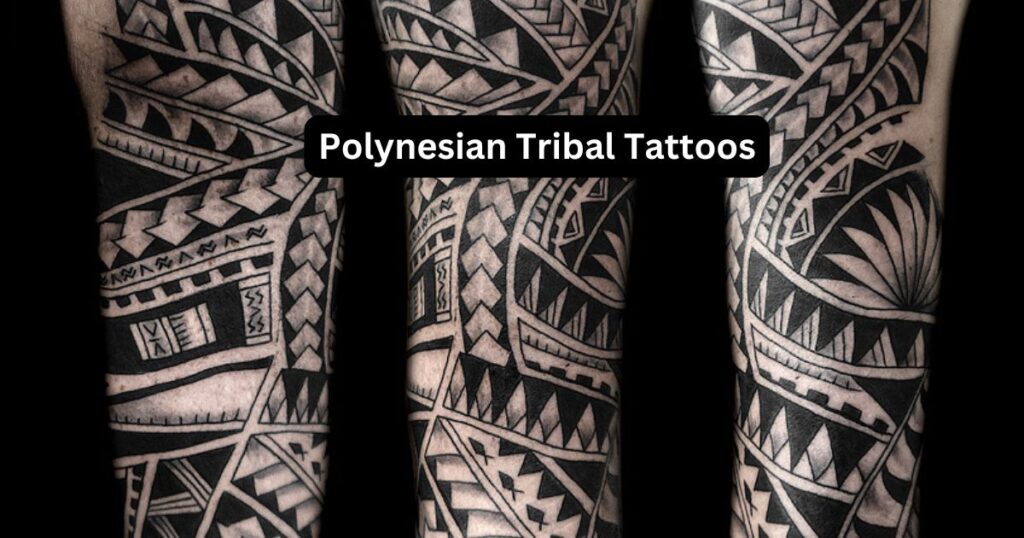
The word “tattoo” comes from the Polynesian word tatau. European sailors brought it home after visiting Tahiti in the 1700s. In Samoa, the men’s tattoo, called the pe’a, covers the body from waist to knees. The women’s version is called the malu.
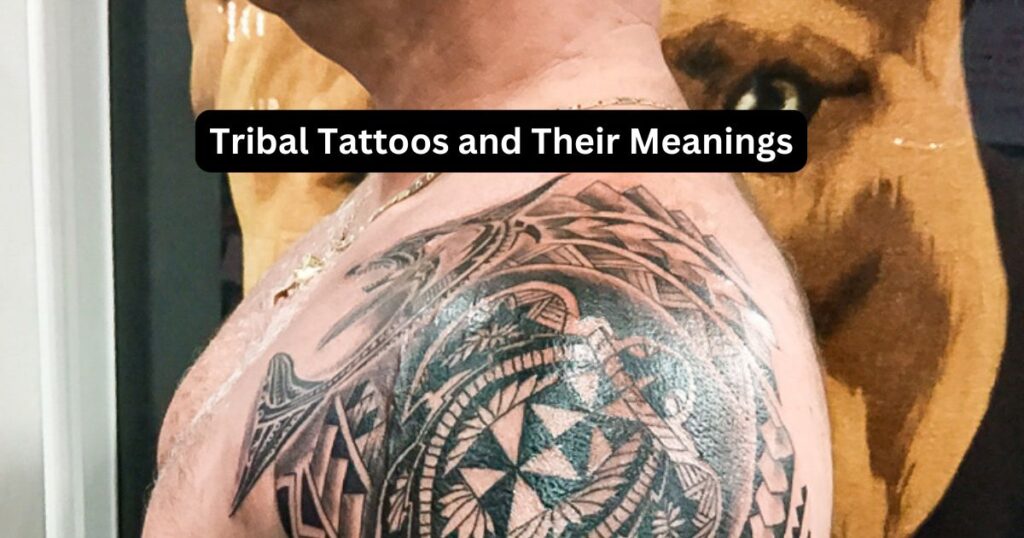
Polynesian designs use bold lines, repeating patterns and shapes drawn from nature. In modern Polynesian-style work, turtles are often read as long life, and shark teeth as protection. Traditional meanings vary from island to island, so ask an artist who knows the culture.
Māori Tā Moko
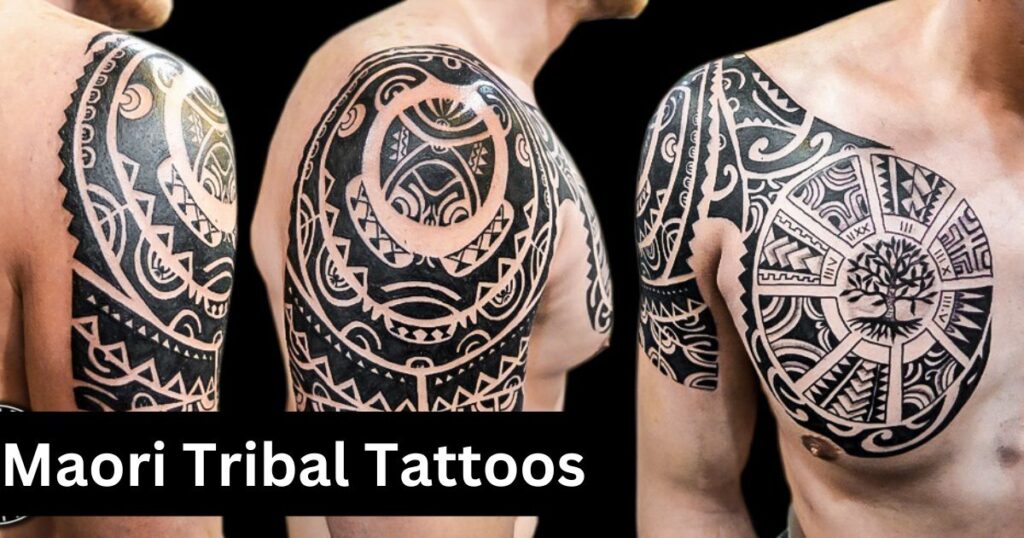
Tā moko is the traditional tattooing of the Māori people of New Zealand. Traditionally, it was carved into the skin with chisels rather than pricked with needles. Te Ara, the Encyclopedia of New Zealand, explains how moko reflected a person’s ancestry and status.
Facial moko is especially sacred. Many Māori see copied moko on non-Māori as deeply disrespectful. Non-Māori who love the style often choose kirituhi, a moko-inspired design that doesn’t claim someone else’s ancestry.
Filipino Batok
In the Philippines, traditional hand-tapped tattooing is called batok. Among the Kalinga people, tattoos once marked warriors, and women wore them for beauty and protection.
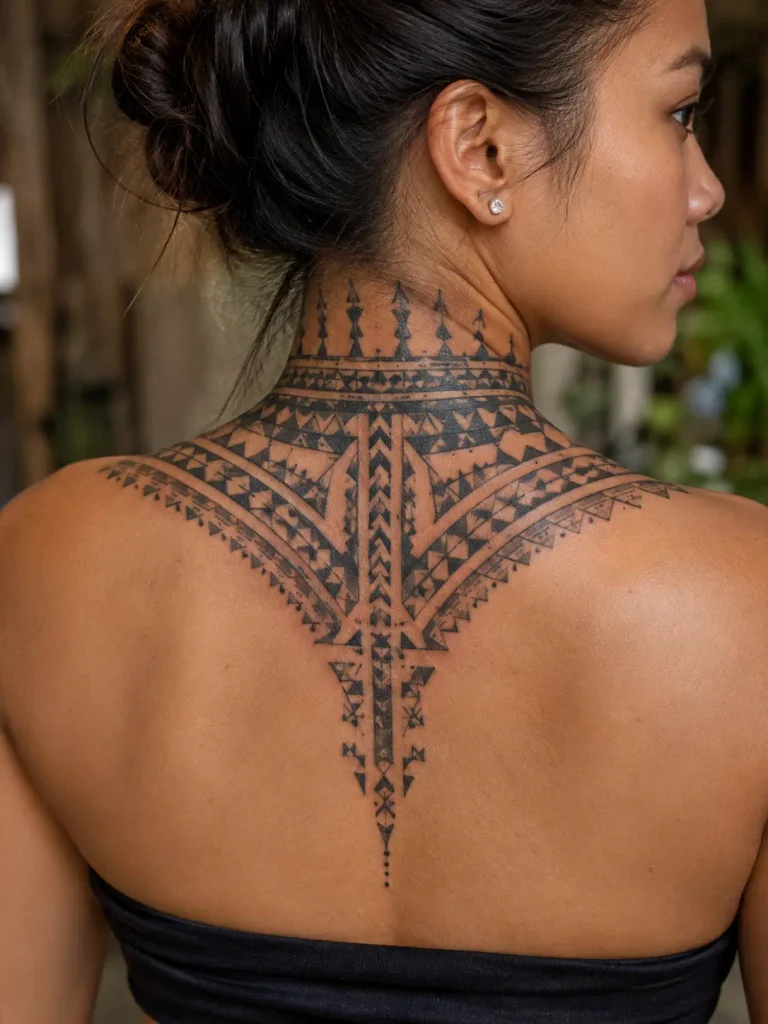
Apo Whang-Od, a Kalinga tattoo artist, became famous worldwide for keeping the tradition alive. Many Filipinos now get batok-inspired designs to honor their heritage.
Native American Tattoo Traditions
Many Indigenous nations in North America had their own tattoo traditions. Some marked achievements, others offered spiritual protection. Inuit women’s tattoos, called kakiniit, are seeing a strong revival among Inuit communities today.
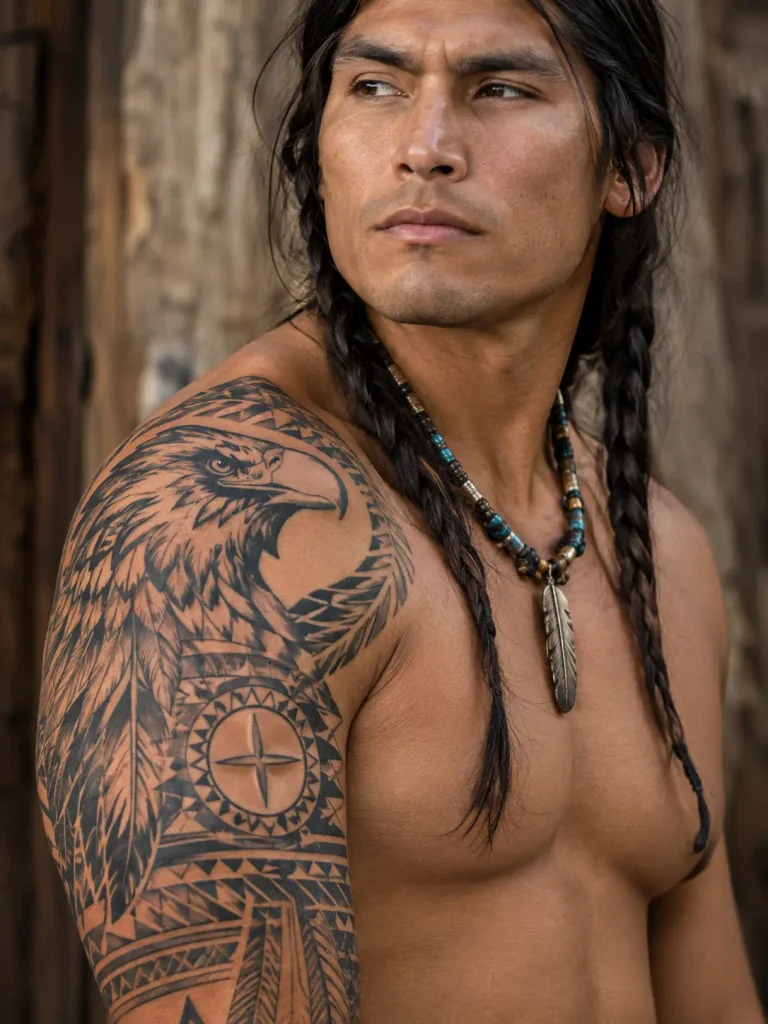
Traditions differ a lot between nations. There’s no single Native American tattoo. Avoid sacred designs unless you belong to that community.
African Tribal Traditions
In many African cultures, scarification is more common than ink, but tattooing has a long history too. Amazigh (Berber) women in North Africa traditionally wore facial tattoos tied to identity and beauty.
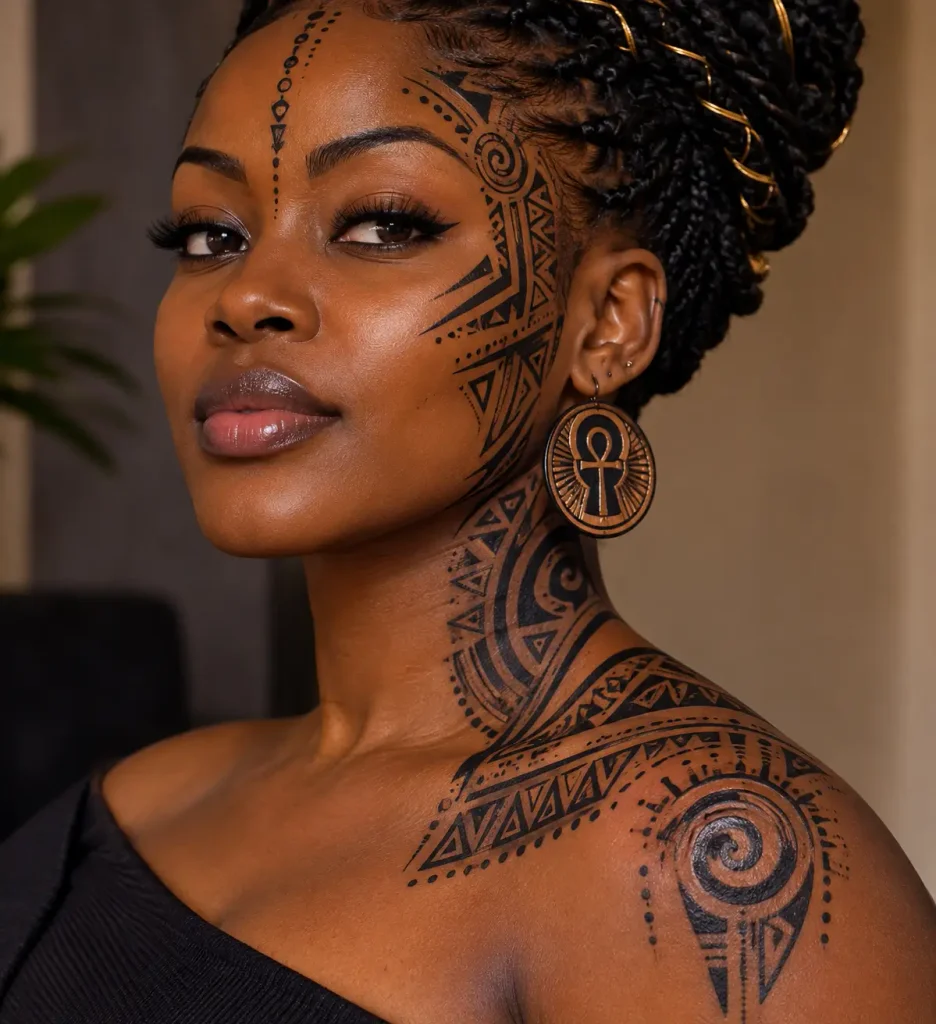
Like elsewhere, these marks belonged to specific peoples. Modern African-inspired designs often draw on patterns like Adinkra symbols from Ghana instead.
The 1990s Tribal Trend
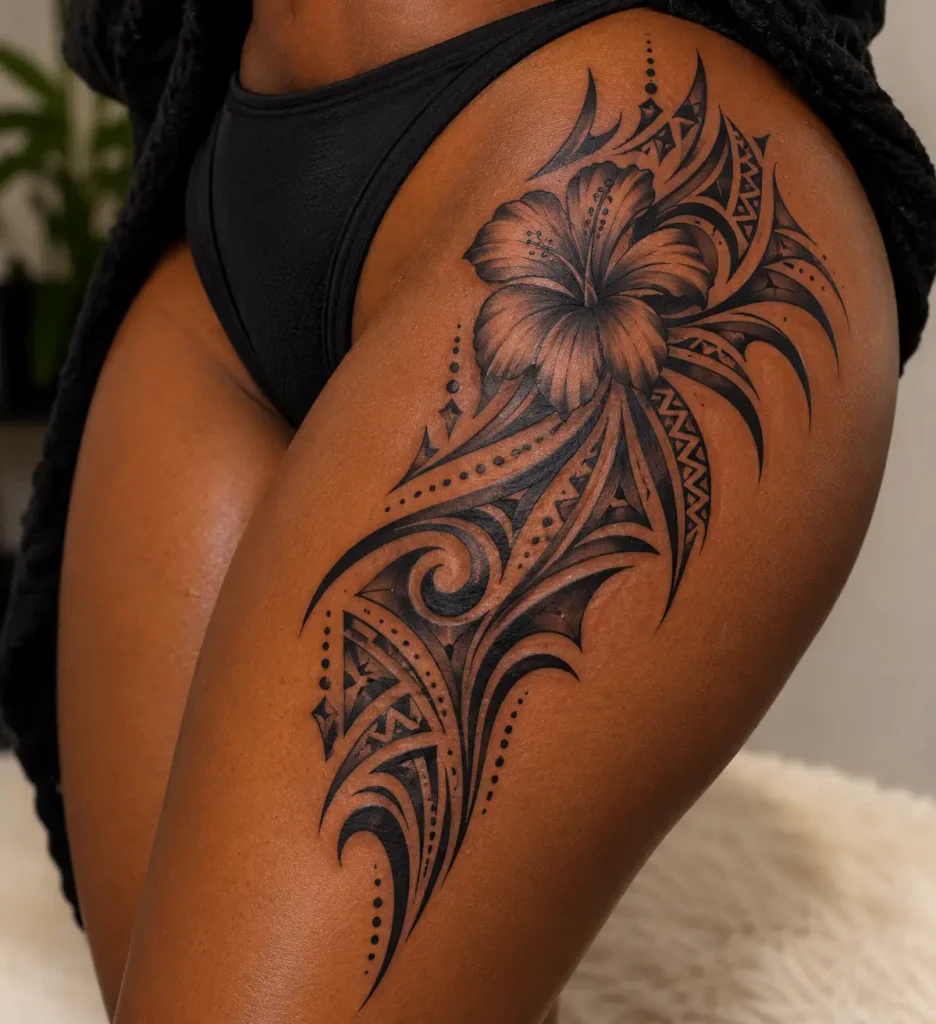
Western “tribal” tattoos took off in the 1980s and 1990s. They used thick black shapes, sharp points and sweeping curves, usually without any traditional meaning. Armbands, shoulder pieces and lower back designs were everywhere. Here’s more on the lower back tattoo trend.
Today, many people refresh old tribal pieces or choose spiky, fine-line cybersigilism instead. See how they compare in cybersigilism vs tribal tattoos.
Tribal Tattoos and Their Meanings: Wearing Them With Respect
If the tradition is part of your heritage, find an artist who comes from it or is trained within it. If it isn’t, avoid copying sacred patterns, facial designs or symbols tied to family lines. A modern tribal-inspired piece designed just for you is a respectful alternative.
Tribal Tattoos and Their Meanings by Shape
Geometric shapes give tribal tattoos their bold patterns and symbolic depth. Many motifs come from traditional Polynesian tattooing, where patterns can represent family, protection, identity, and personal history. Their meanings depend on the culture and how each element appears in the design.
Spirals and curls
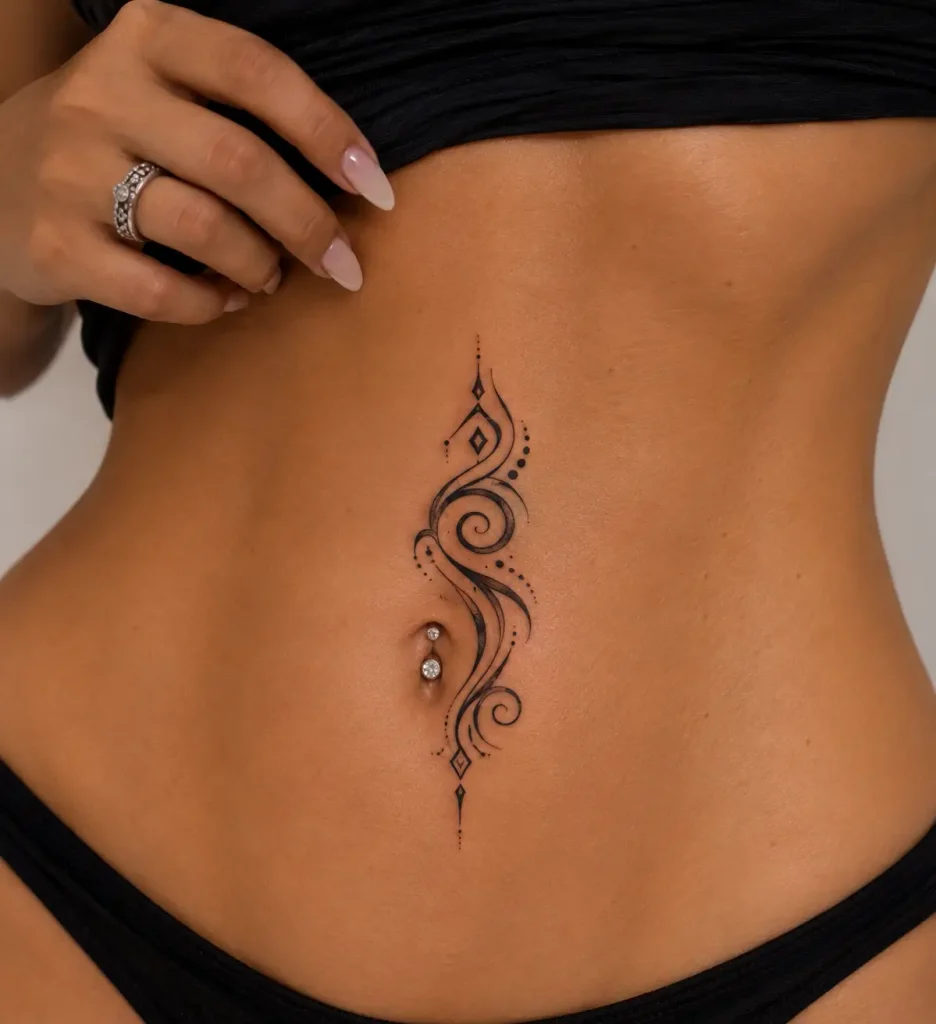
Spirals often represent growth, change, and the cycle of life. Curved patterns can also reflect the ocean, natural movement, and new beginnings. In Māori art, the koru spiral draws inspiration from an unfurling fern frond.
Sharp points and spikes
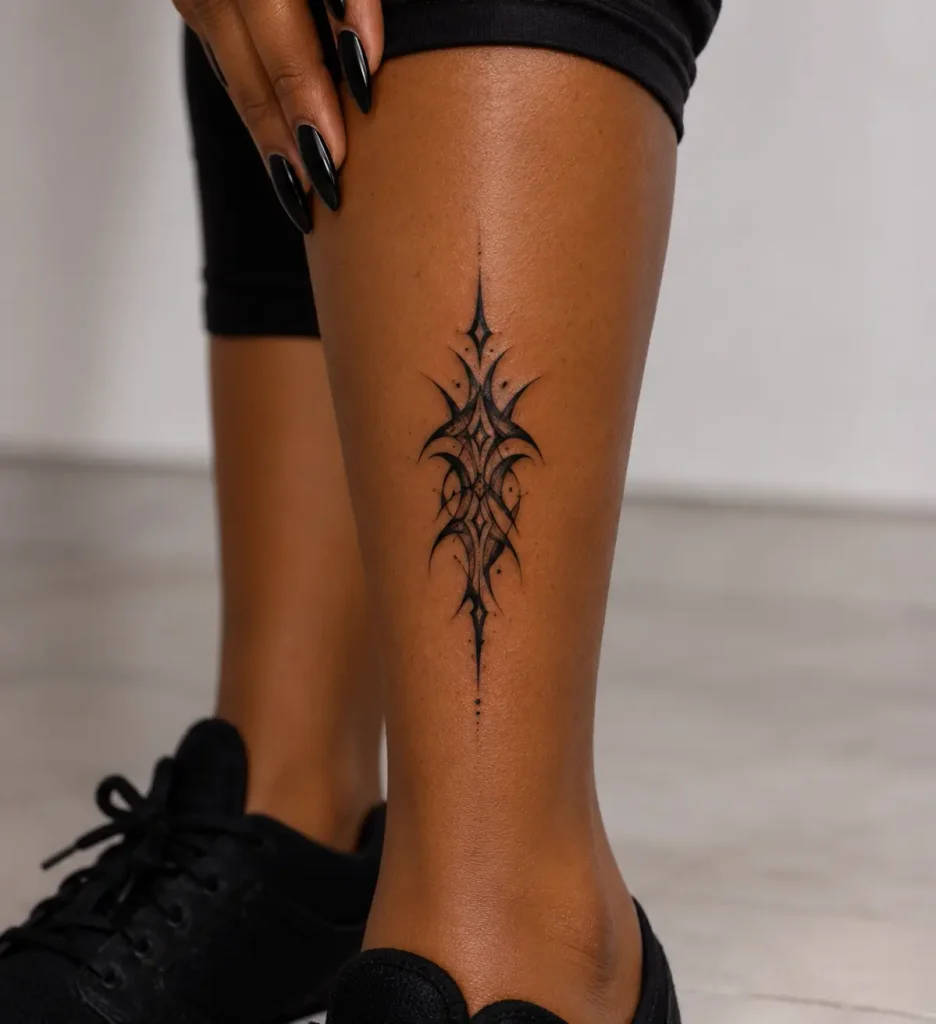
Pointed patterns often resemble spearheads or shark teeth in Polynesian designs. These motifs can represent strength, courage, protection, and the willingness to defend what matters. Their meaning depends on the specific tradition and arrangement.
Bands and rings
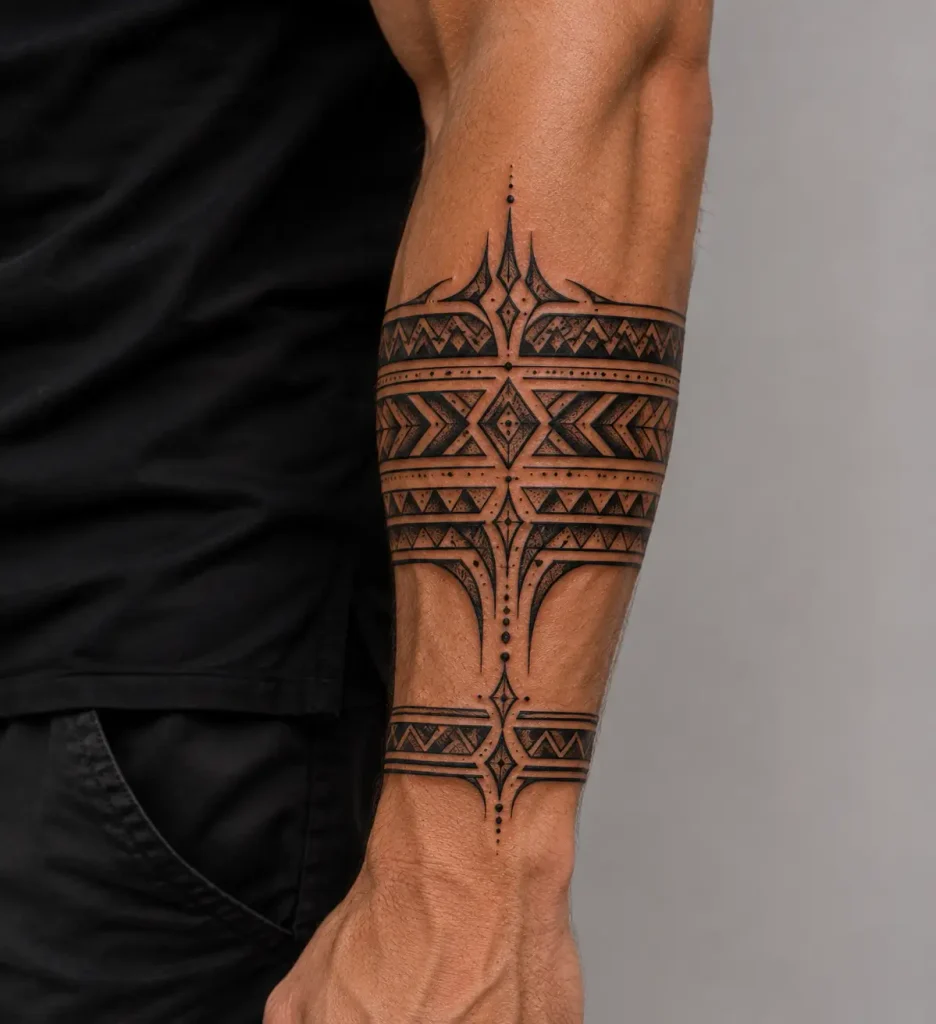
Repeating bands create structure and balance in tribal tattoos. In traditional Polynesian tattooing, patterns placed around the body could communicate identity, social standing, family connections, or personal milestones. Some meanings depended on the wearer’s community and status.
Repeating triangles
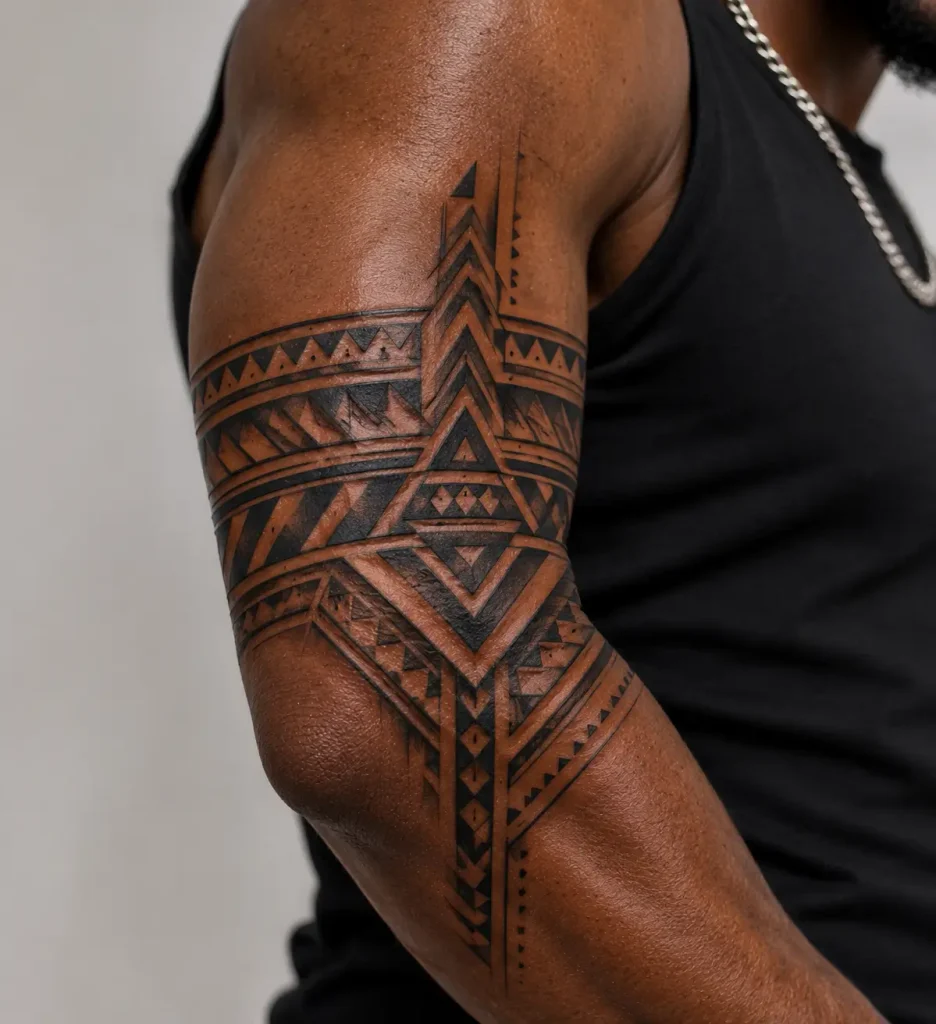
Rows of triangles are common in Polynesian tattoo patterns. When arranged as shark teeth, they are associated with protection, strength, and courage. Triangle patterns can also represent other natural forms, so their meaning depends on the design.
Waves and lines
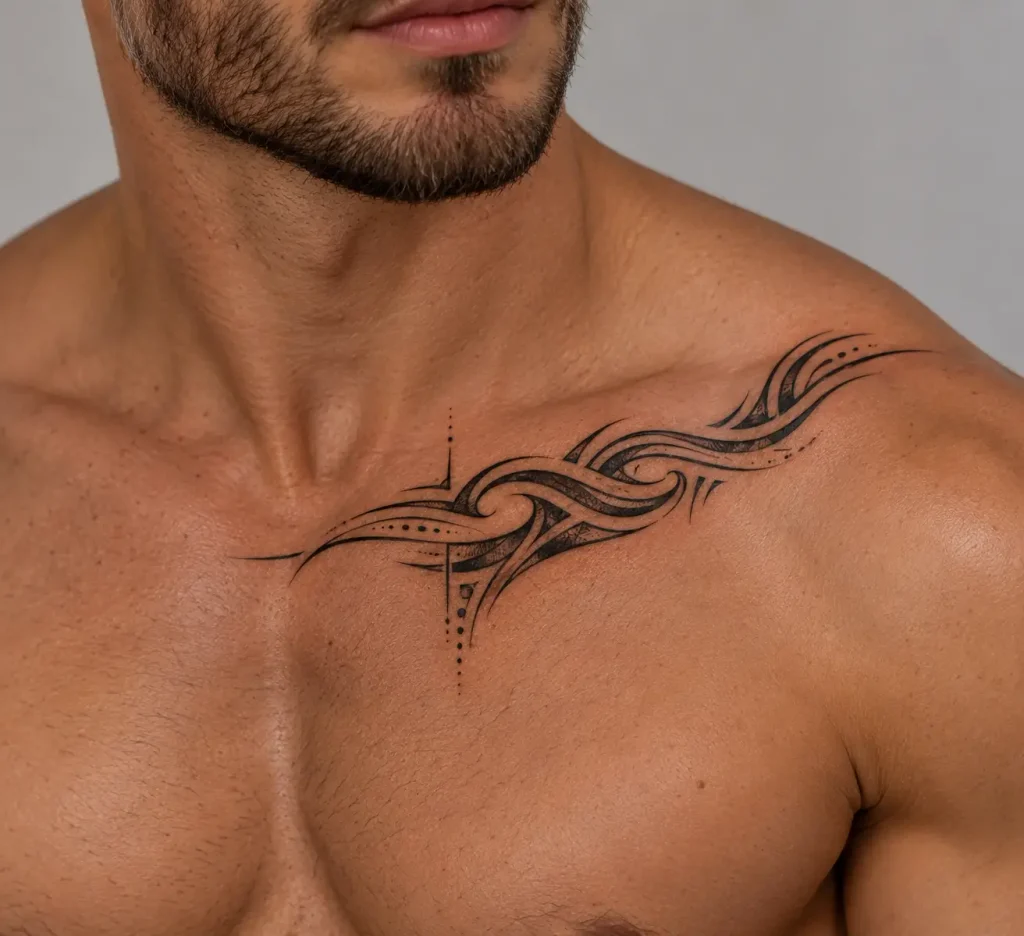
Curved lines often represent ocean waves, movement, and life’s continuous journey. In Polynesian traditions, the ocean connects closely with ancestry, travel, and island life. Straight and parallel lines can create structure, boundaries, or visual rhythm within a larger tattoo.
A tribal tattoo rarely tells its story through one shape alone. The arrangement of patterns, their placement on the body, and the cultural tradition behind them all influence the meaning. Two tattoos with similar geometric elements can carry very different messages. Understanding these details helps you choose a design that reflects your personal story while respecting its cultural origins.
Bornean and Southeast Asian Tribal Tattoos
The Iban people of Borneo are known for the bunga terung, a rosette design often placed on the shoulder. Traditionally, it marked a young man’s first journey from home. Other Bornean designs show dogs, dragons and plants, each tied to protection or status. These tattoos were made by hand-tapping ink into the skin.
How Tribal Tattoos Are Made
Many traditional tattoos were made with hand tools, not machines. Polynesian artists used bone or tooth combs tapped with a mallet. Filipino batok used thorns or metal points. Some artists today still offer hand-tapped tattoos, often within their own communities. Machine tribal work is more common in Western shops.
Respecting Tribal Tattoo Traditions
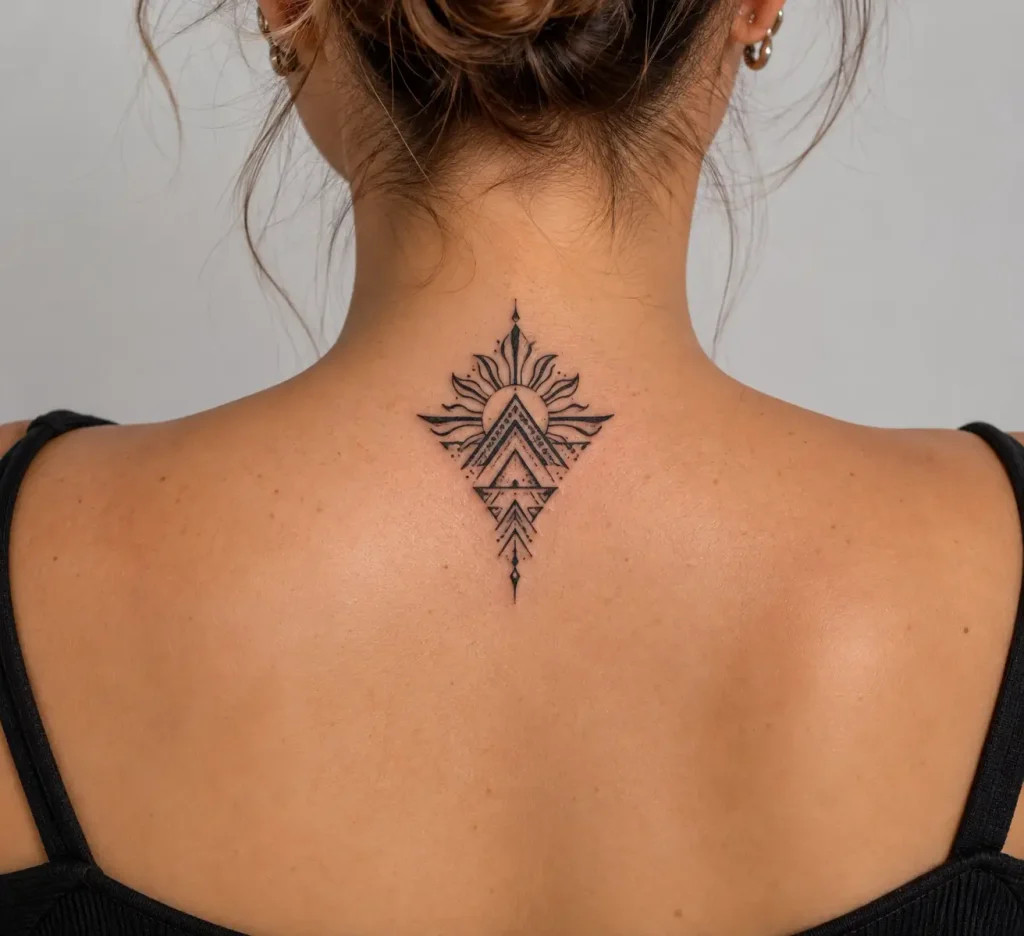
Many tribal designs carry family, rank or spiritual meaning. Copying them without understanding can be offensive. If you don’t belong to the culture, choose neo-tribal or work with an artist who knows the tradition. Some Polynesian artists create designs that tell your own story in their visual language.
Tribal Tattoos and Their Meanings in Modern Life
Today, many Pacific Islanders wear traditional tattoos to reconnect with their roots. In New Zealand, tā moko has seen a strong revival since the 1990s. Samoan pe’a and malu are still worn as markers of identity and service. For these communities, the tattoo is a living tradition, not a trend. Knowing that history helps outsiders wear tribal-inspired work with respect.
Tribal Tattoo Colors
Traditional tribal tattoos are almost always black. Some modern pieces add red or blue accents, but this breaks from tradition. Solid black also ages best, which is one reason tribal work lasts so well.
Tribal Tattoo FAQs
What does a tribal tattoo mean?
Traditional tribal tattoos record identity, like family, rank and life events. Modern Western tribal designs are usually decorative.
Is it cultural appropriation to get a tribal tattoo?
It can be, if the design copies sacred patterns from a culture you don’t belong to. Inspired, original designs are generally fine.
Can an old tribal tattoo be covered or reworked?
Yes. Artists often blend old tribal into new blackwork, add fine-line detail around it or cover it with larger designs. Here’s more on blackwork tattoos.
Finding the Right Artist
For traditional work, look for an artist who belongs to that culture or learned from it. For modern tribal-inspired pieces, look for clean, bold blackwork in their portfolio. Ask about the meaning of any pattern before it goes on your skin.
Related reading: Cybersigilism vs Tribal · Barbed Wire Tattoo Meaning · Blackwork Tattoos · Tattoo Styles Explained